
Mica
Physical models, modal resonators, analogue, digital and FM across four layers, with ADSR envelopes, dual filters and modulation on every parameter.
$89
Activate once with a serial number and use it offline on up to five devices, with free updates for life.
The demo has no time limit and adds occasional noise bursts. Activation requires a Stemwire account. By buying, you agree to the Terms and Software Licence, request immediate access, and acknowledge that your right to withdraw ends when delivery begins.
Covered by
- Rekkerd.org31 Aug 2026
- Audiofanzine31 Aug 2026
- KVR Audio30 Aug 2026
- Dubspot1 Sep 2026
More than 70 starting points
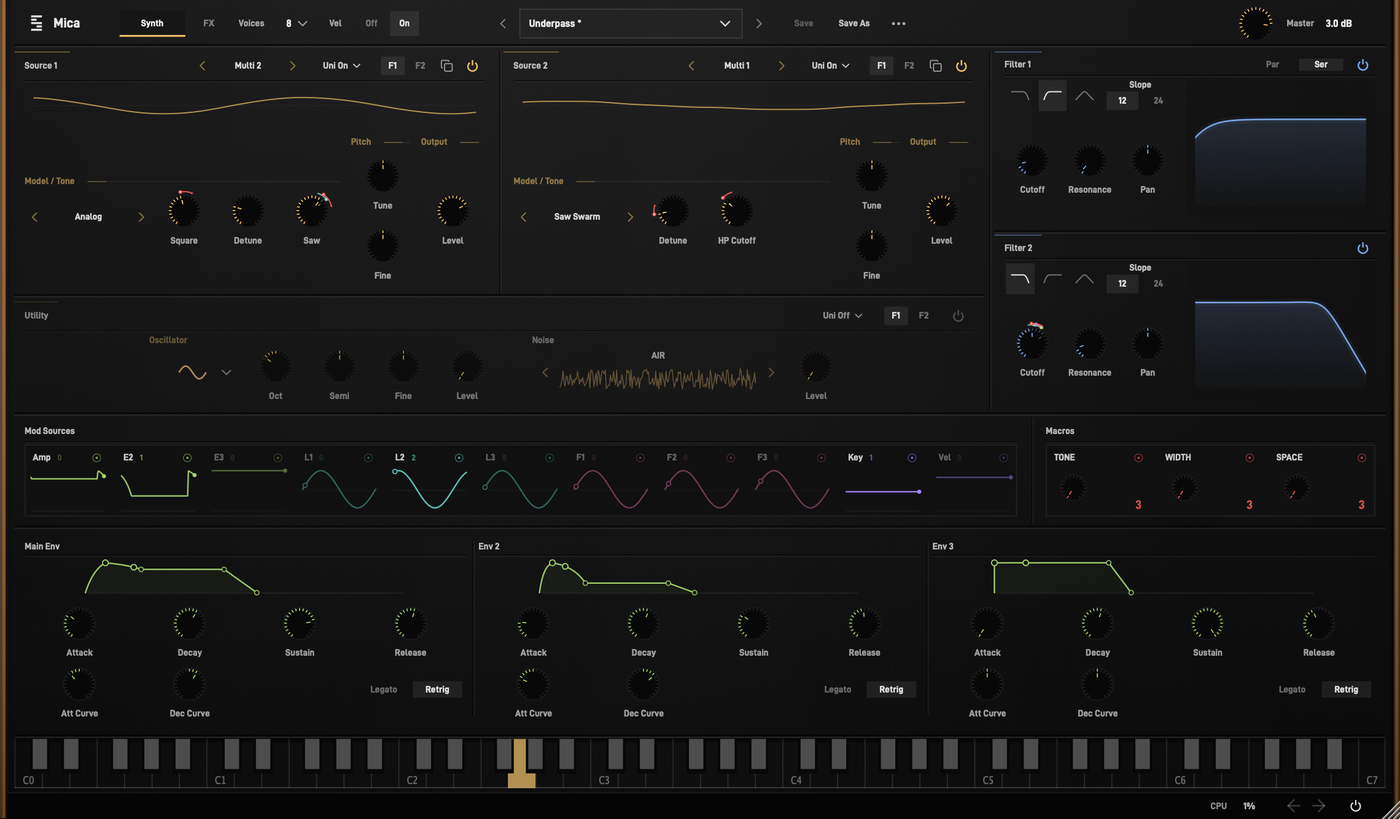
The four engine types hold more than seventy models between them, so a patch rarely starts from a waveform you have heard a thousand times. Two of them stack, with a utility oscillator and a noise generator underneath, and the noise generator can also play your own samples.
The point is to quickly explore the models and find a source sound you wouldn’t normally start with. Once you find one you want to keep, use the controls you already know to shape it and give it movement until it can carry the track all the way through. There are fifty factory patches too, if you need a place to start.
Modulate everything
Fourteen sources reach every parameter. Three envelopes, three LFOs, three drawable functions, three macros, key tracking and velocity. Drag a source onto a knob and set the amount. To have one modulator control how much another does, drag a second source onto that amount. The routing sits on the same screen as the sound controls, so there is no separate matrix page.
Change an engine type and the previous one keeps its settings. Switch back and they are as you left them. The four effect slots behave the same way. Each slot stores separate settings for all twelve effect types, and you drag the slots into the order you want.
Specifications
- Sources
- Two slots, four engine types each: Macro 1, Macro 2, Modal and FM. Sub oscillator and noise generator alongside them.
- Filters
- Two filters, low pass, band pass or high pass, 12 or 24 dB, serial or parallel.
- Effects
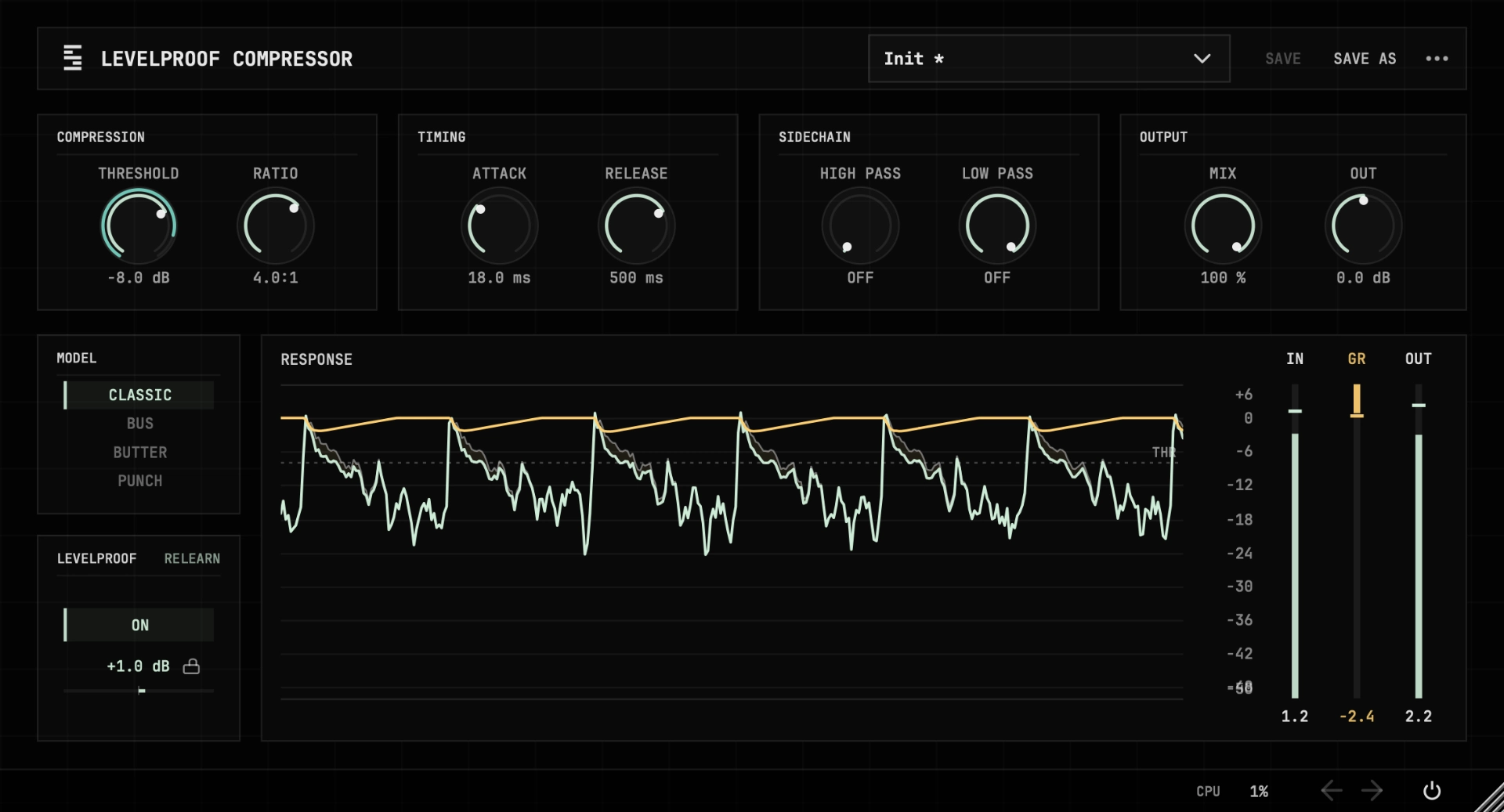
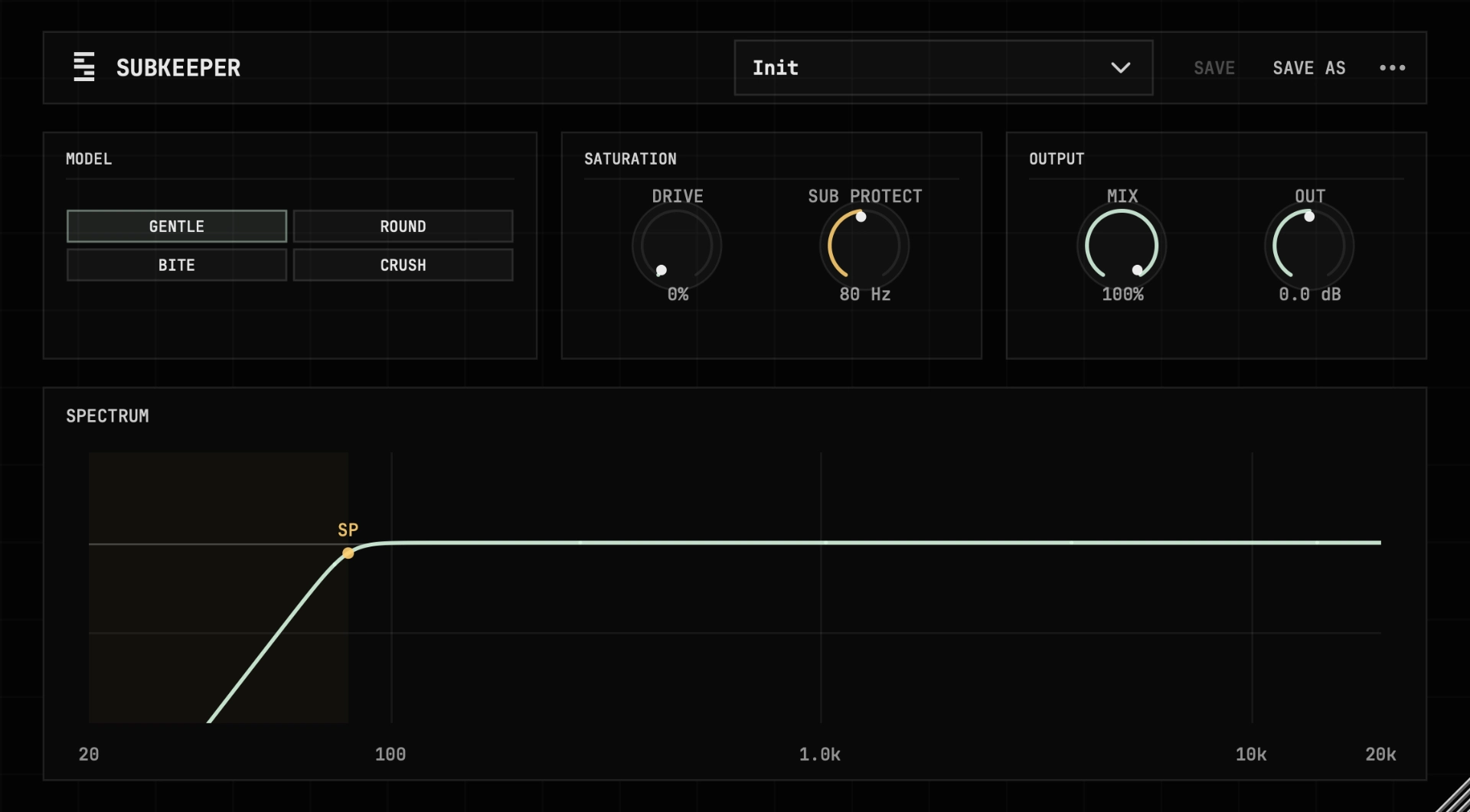
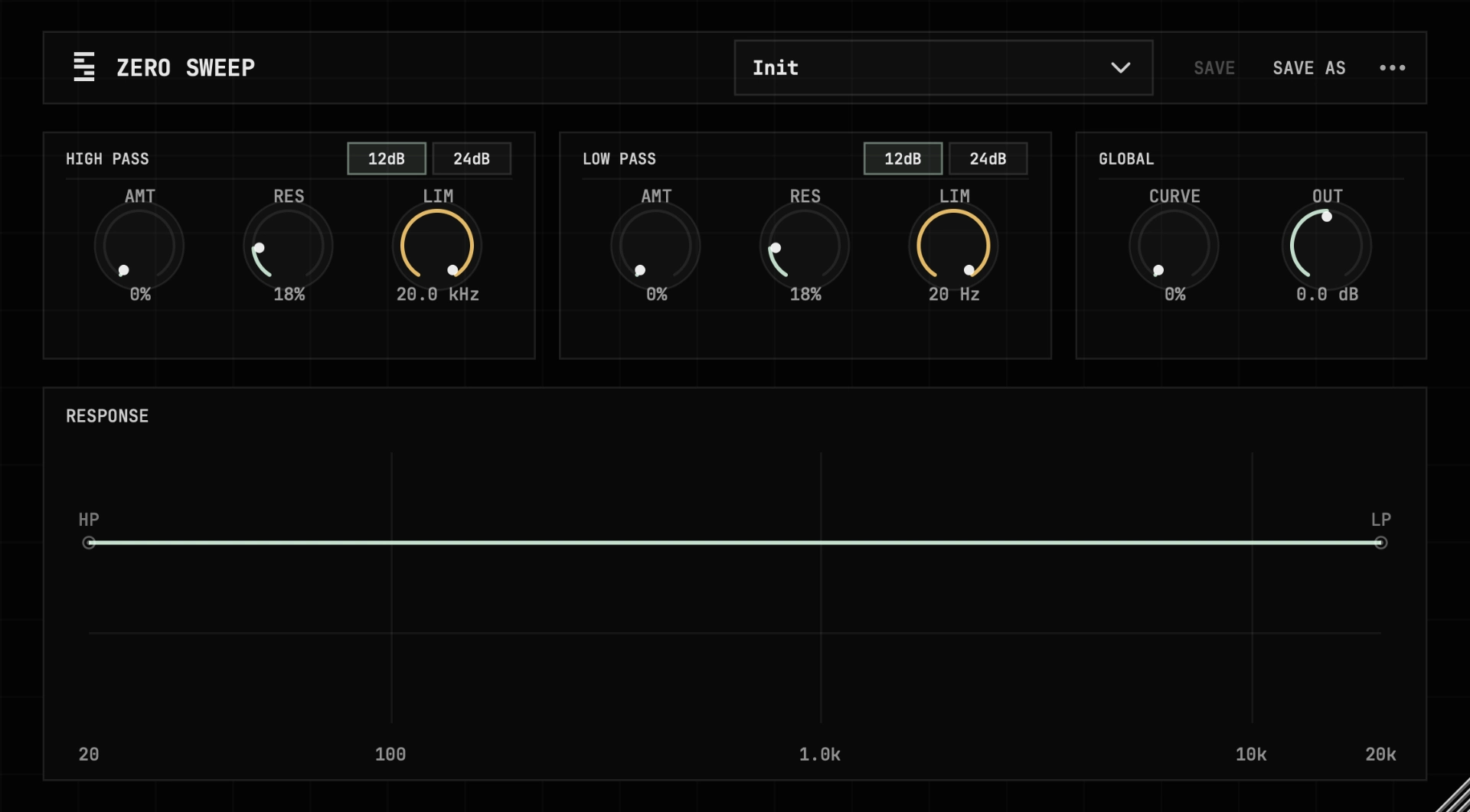
- Four reorderable slots, twelve effect types: reverb, stereo delay, chorus, granular, resonator, frequency shifter, pitch shifter, crunch, overdrive, filter, EQ, compressor.
- Modulation
- Fourteen sources: three envelopes, three LFOs, three drawable functions, three macros, key tracking, velocity. Any source to any parameter, including the depth of another modulation.
- Voices
- One to eight, plus 16 and 32. Per-source unison.
- Presets
- Fifty factory patches across eight categories, plus your own.
- Formats
- VST3 and AU on macOS, VST3 on Windows.
- Documentation
- Read the manual
Changelog
1.0.34 Sep 2026
- Mica’s panel now looks closer to what the instrument would look like if it were hardware.
- The plugin window is smaller so it takes up less space in a session.
- Fixed several small bugs and inconsistencies, including incorrect default knob states and rendering errors in some edge cases in the modulation strip.
- Read about the redesign.
1.0.21 Sep 2026
- Minor interface and factory preset refinements.
1.0.130 Aug 2026
- Modulation set on an engine now comes back with it. Switching an engine type away and back used to leave its modulation inactive until you assigned a new one on that engine. Effects slots behaved the same way.
- Copying a source now copies its modulation too.
1.0.029 Aug 2026
- First release.
FAQ
- What sound sources are included?
- Mica includes more than seventy physical models, modal resonators, analogue, digital and FM sources. You can layer two main sources with a utility oscillator and noise, or load your own sample into the noise source.
- How does modulation work?
- Drag any modulation source onto a control and set the amount. Fourteen sources can reach every parameter, and one source can also control the amount of another.
- Do settings reset when I change an engine or effect?
- No. Each engine and effect keeps its own settings. Switch back and your previous values are still there.
- Which formats and platforms are supported?
- VST3 and AU are available on macOS. VST3 is available on Windows.